
“If a man is to write A Panegyrick, he may keep vices out of sight; but if he professes to write A Life, he must represent it really as it was.”
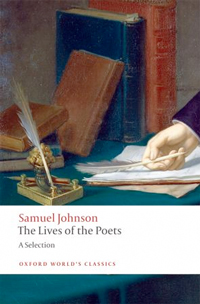
In the last of his major writings, Samuel Johnson looked back over the previous two centuries of English Literature in order to describe the personalities as well as the achievements of the leading English poets. The major Lives – of Milton, Dryden, Swift, and Pope – are memorable cameos of the life of writing in which Johnson is as attentive to human frailty as to literary prowess.
The shorter Lives preserve some of Johnson’s most piercing, critical judgements. Unsentimental, opinionated, and quotable, The Lives of the Poets continues to influence the reputations of the writers concerned. It is one of the greatest works of English criticism, but also one of the most diverting.
The Oxford World’s Classics selection of the Lives of ten of the most important poets draws its text from Roger Lonsdale’s authoritative complete edition and has an introduction by John Mullan. In this audio guide you can hear John Mullan introduce the work. Simply click on the links to listen.
Background
1. By the time Samuel Johnson came to write The Lives of the Poets, he was in his late sixties and the best-known man of letters in the land. To hear more about his career, click here. [2:12]
2. This book came about as the result of a commission from a group of London booksellers. To find out more about the project, click here. [1:55]
Reading The Lives
3. The Lives of the Poets was, in John Mullan’s words, “the final step in the Johnsonian creation of English literature” as a body of texts that could rival those of ancient Greece and Rome. Click here. [2:06]
4. The modern reader may be surprised by how irreverent Johnson is towards his subjects, even or especially towards those he admired the most. Find out why by clicking here. [2:26]
5. Johnson was a brilliant critic and a wonderful close reader. Click here to hear more about Johnson’s view of poetry and why he was so concerned with pointing out writers’ faults. [4:46]
6. Click here to listen to John Mullan explaining how he selected the lives included in this edition of the book. [1:33]
The complete audio guide can be downloaded here.